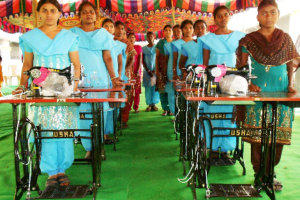
Arbor India was established in 2005 as the first Panikkarian experiment that involved the integration of economics and solidarity, and inter/intra religious dialogue between the populations of Andhra Pradesh, a vast region in the south of the Asian continent. The program of participatory involvement and organization of grassroots tribal communities involved over 300 rural villages throughout the region and integrated collaboration of many local civil society, political and religious groups. Different faiths, ideologies and castes united by a spirit of collaboration and sharing.
INTEGRATED COMMUNITY ORGANIZATION
The Arbor villages in India are engaged in a process of community-based organization inspired by Gandhian Swaraj, the principle of self-management that reclaims the autonomy of communities through the panchayat and village assemblies. Every village is organized as an independent core that achieves its autonomy through the management of voluntary groups of women who together head a program of strengthening, community capacity-building, and a plan of action and interventions that, over time, involve the whole village and its inhabitants.
SUPPORTIVE MICROFINANCE
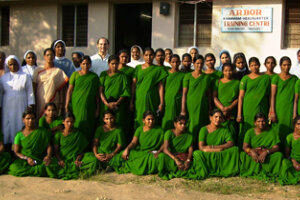
Arbor’s supportive microfinance involves programs for populations that include microsaving, microinsurance and microcredit.
MEDICAL PROGRAMS
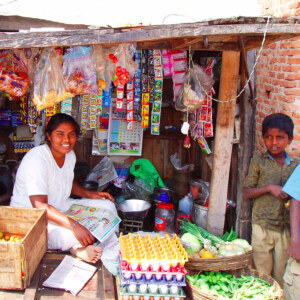
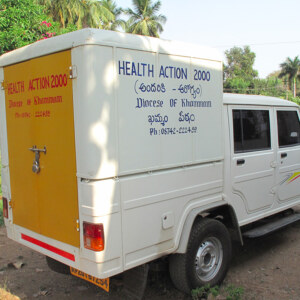
the medical program in rural communities in India takes place through mobile clinics and medical centers that reach all Arbor villages in rotation, to manage the care, treatment and therapies for major diseases widespread among the population, such as leprosy, tuberculosis, malaria and scabies.
WATER and HEALTH PROGRAMS
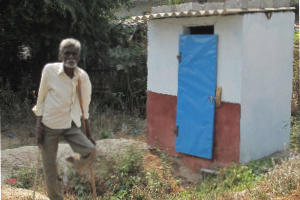
Arbor India is engaged in a vast operation aimed at improving the sanitary conditions of rural villages. The presence of open-air sewage and the lack of a centralized sewage system is tackled by extensive programs of construction of sanitation facilities and public and private toilets with organic septic tanks. The improvement of hygienic standards affects all villagers and their living conditions. The program, one of the first of its kind in the country, has been recognized and supported by the local government and used as a model for the whole region. Arbor promotes a system of community water management in the villages covered by the program. Starting with the village chief (Sarpannch), all the villagers, irrespective of caste, social class or religion, are involved in the construction of village wells and the installation of water purifiers that can then be used by the entire community.
STRUCTURAL PROGRAMS
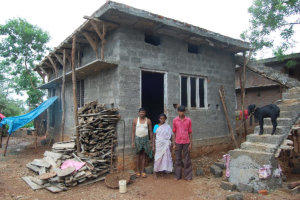
Since 2007, Arbor has set up a program to address the housing crisis afflicting the rural population of Andhra Pradesh (called Telangana today). In collaboration with the local government, Arbor delivers a cash contribution to beneficiaries for the construction of a house that meets safety and hygiene standards. The goal of the program is to ensure better housing for families living below the poverty line.
PROFESSIONAL TRAINING & COOPERATION PROGRAMS
At the village level, Arbor is committed to training, with the aim of enhancing the inclusion of the beneficiaries in the labor force and facilitate their self-organization into cooperatives. Vocational training is accompanied by mentoring and legal advice for the formation of cooperatives and other micro entrepreneurial initiatives. To this end, the talent of the beneficiaries is enhanced to realize the full potential of each human being.