
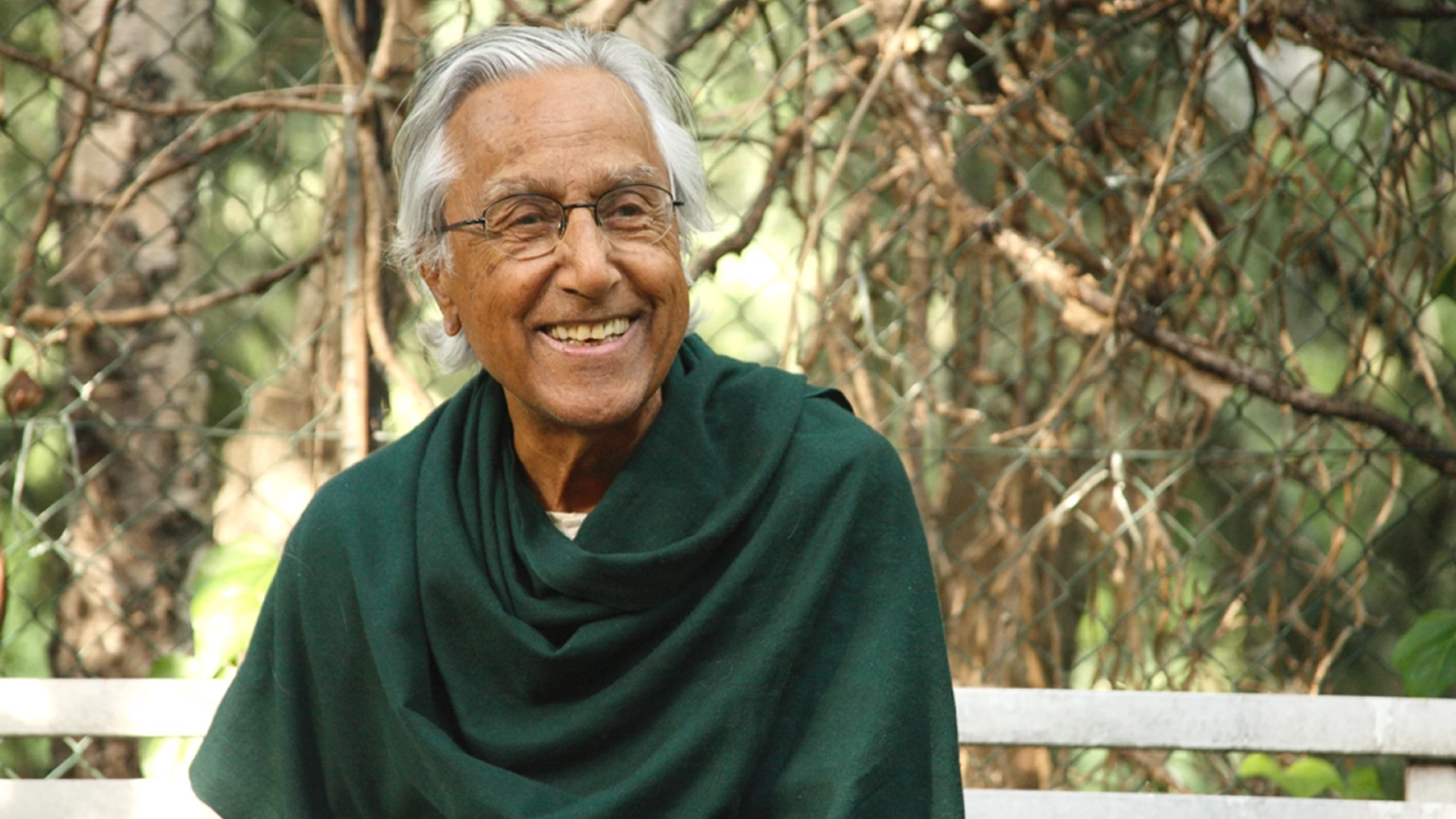
The Arbor was founded in 2005, after the collaboration of Raimon Panikkar with a group of businessmen, economists and philanthropists. It was born from the creative will of the core founder with the aim of promoting practices of dialogue between cultures, peoples and communities.
The Arbor is a secular, non-profit organisation registered in Switzerland and based in Lugano. The is governed by the statutes that define its objectives and activities.
The tree, or “Arbor”, imagined by Raimon Panikkar is the symbol of life in its primordial form, generating vital ties that draw energy from the universe and then return it to the land through its fruits.
The Arbor coordinates, finances and manages programmes aimed at the implementation of the principles of the association in collaboration with institutions, organizations and societies that share its objectives. Article 3 of the Statute outlines the following areas:
1)” Humanitarian activities:
a. Hospitals, health facilities, shelters and support and care for the poor, victims of abuse, the sick or otherwise in need;
b. Schools and training centres;
c. Development projects for the basic needs, projects of small credit, etc.
2. Cultural and interfaith activities :
a. Promotes, assists and supports interreligious and intercultural dialogue through conferences, seminars, courses and conferences;
b. Grants aid to students or researchers that deepen issues related to religions different from their own and those related to inter-religious dialogue.”
The Arbor is inspired by the thoughts of the philosopher and theologian Raimon Panikkar, whose mother was Catalan and father Indian. After his death in 2010, the has continued to work to spread his teachings, operating to put into practice the transformative experience, inherent in the creative movement between thought and action.
INTERCULTURAL AND INTERRELIGIOUS DIALOGUE A
Dialogue today is not a luxury or a side issue. Our current problems of justice, ecology, economy and peace require a mutual understanding between the peoples of the world, making dialogue between cultures and religions inevitable and indispensable. Intercultural exchange requires intracultural exchange – only dialogue between inside and out can allow us to follow a peaceful path. It is in this Trinitarian movement that Peace is found, and Forgiveness becomes an indispensable tool that opens us to peaceful engagement and not confrontation. Religion thus becomes an experience and not an experiment.
THE ECOSOPHY
Ecosophy is the wisdom of the earth, which opens us to the art of listening and experience of “cosmotheandric truth”.
THE COSMOTHEANDRIC TRUTH
The cosmotheandric truth is the constitutive relation between the human dimension, the divine and cosmic. Man, World and God are inseparable.
MYSTICISM
The human being, as it is a political and economic (pluralistic) is also a mystical being that is capable of a dimension of depth where his true nature can blossom and stir true ethics, which comes more from the heart than from the mind.
The Arbor recognizes the significant moral inspiration of the principles of M.K. Gandhi, father of non- violent action and thought:
THE AHIMSA
The practice of non-violence is the most noble human practice. It is not a passive acceptance but a state of active and purposeful love. The Ahimsa is an extremely powerful weapon of peace and the sum of human virtue. Non-violence can change the world through the people who practice it with courage and determination.
THE SATYAGRAHA
Truth has no form. As many images of the truth exist as there are men. Truth is the highest form of divinity and should be expressed in thought, action and word. Wisdom is made of truth. The power of truth guides man to justice.
ETHICAL ECONOMY, SOLIDARITY and CIVIL ECONOMY
The separation of paths taken by ethics and economics is a source of injustice and conflict. The limits of the economy, separated from moral practice and attention to others, are overcome by a vision that considers man as a subject and not as an object, the only real aim of economic practice seen as an instrument of justice and as an implementation of human beauty. Reciprocity and fraternity are loving alternatives to forms of individualist capitalism and economic egoism. The concept of common good takes the place of profit and gains. The desire to enable balanced access to resources at all levels produces a source of research into new forms of sharing economic and financial reorganization taking into account involvement, participation, collaboration, solidarity and redistribution.